الدليل المصوّر للأطفال · 02
صلاتي المسار المصوّر.
عشر مراحل مصوّرة للتعرّف على تسلسل حركات الصلاة في طمأنينة.
انظر · اقرأ · تدرّب مع شخص كبير
اتبع مسار الحركات في طمأنينة.
العبارات تشرح الصورة، ولا تحذف ما يحتاجه الطفل من تفصيل.
مرتّبة
-
01
خطوة 1
التهيّؤ والقيام
توضّأ إن احتجت، واستقبل القبلة، وقف معتدلًا على سجادتك.
 قبل أن تبدأ
انوِ بقلبك الصلاة التي تريدها، كأن تنوي ركعتي الفجر. والنية محلّها القلب، فلا يُنطق في هذه الخطوة بشيء.
التهيّؤ · انظر دليل الوضوء
-
02
خطوة 2
تكبيرة الإحرام
ارفع يديك إلى جانب أذنيك وابدأ الصلاة.
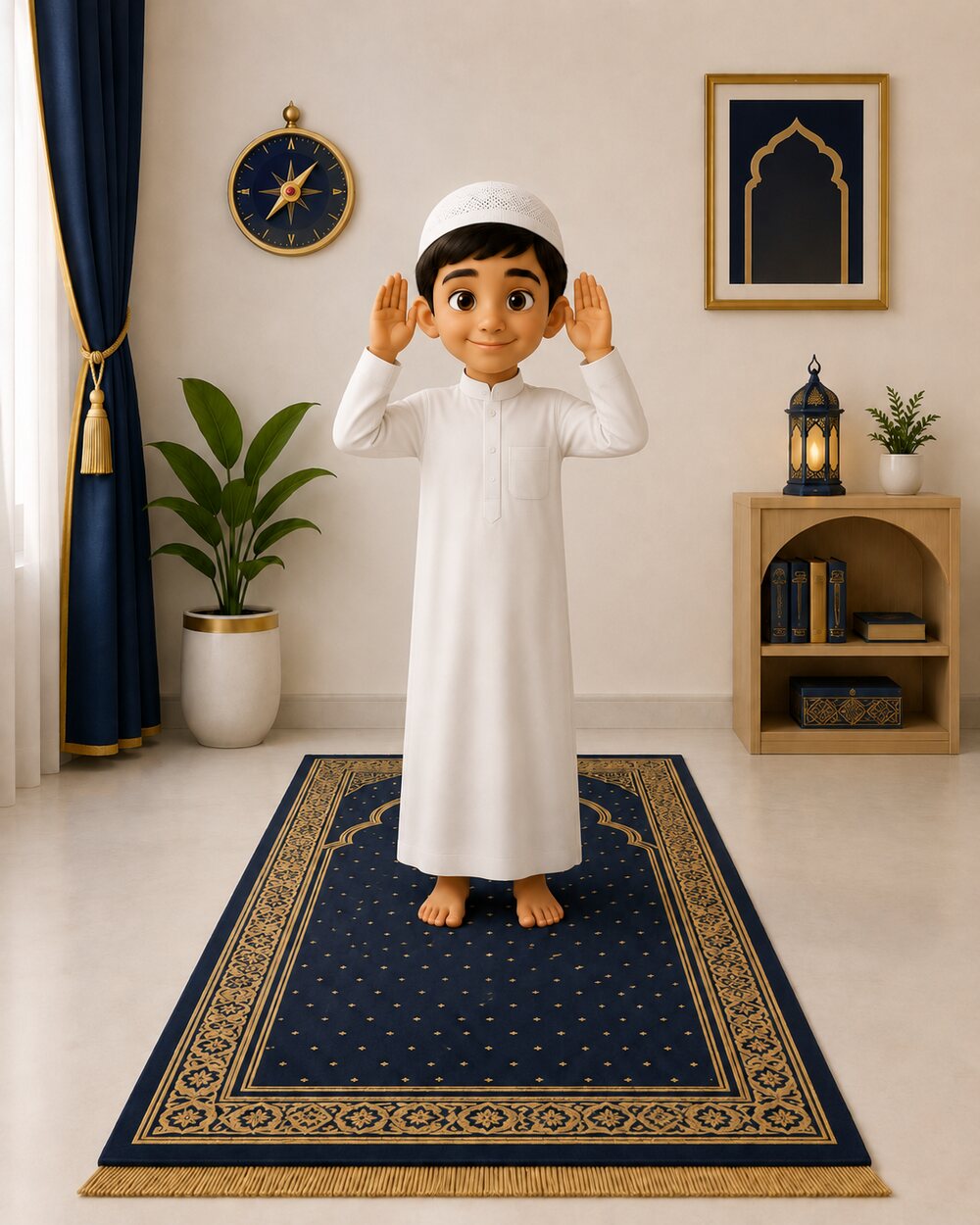 ما يُقالتكبيرة الإحرام — مع رفع اليدين
اللَّهُ أَكْبَرُ
قلها مع رفع يديك، ثم ضع يدك اليمنى على اليسرى على صدرك.
دعاء الاستفتاحسُبْحَانَكَ اللَّهُمَّ وَبِحَمْدِكَ، وَتَبَارَكَ اسْمُكَ، وَتَعَالَىٰ جَدُّكَ، وَلَا إِلَٰهَ غَيْرُكَ
يُقال سرًّا بعد تكبيرة الإحرام وقبل التعوّذ.
البخاري ٧٥٧ · مسلم ٣٩٢ب
-
03
خطوة 3
القراءة في القيام
ضع يديك على صدرك واقرأ سورة الفاتحة كاملة.
 ما يُقالالتعوّذ
أَعُوذُ بِاللَّهِ مِنَ الشَّيْطَانِ الرَّجِيمِ
يُقال سرًّا قبل الشروع في القراءة.
سورة الفاتحة — تُقرأ كاملة في كل ركعةبِسْمِ اللَّهِ الرَّحْمَٰنِ الرَّحِيمِ
الْحَمْدُ لِلَّهِ رَبِّ الْعَالَمِينَ
الرَّحْمَٰنِ الرَّحِيمِ
مَالِكِ يَوْمِ الدِّينِ
إِيَّاكَ نَعْبُدُ وَإِيَّاكَ نَسْتَعِينُ
اهْدِنَا الصِّرَاطَ الْمُسْتَقِيمَ
صِرَاطَ الَّذِينَ أَنْعَمْتَ عَلَيْهِمْ غَيْرِ الْمَغْضُوبِ عَلَيْهِمْ وَلَا الضَّالِّينَتُقرأ كاملة في كل ركعة، ويُقال بعدها: آمين.
في الركعتين الأوليين تُقرأ بعد الفاتحة سورة قصيرة أو ما تيسّر، كسورة الإخلاص. وفي الثالثة والرابعة تُقرأ الفاتحة وحدها.
البخاري ٧٥٦
-
04
خطوة 4
الركوع في طمأنينة
انحنِ وظهرك مستقيم ويداك على ركبتيك. واثبت في طمأنينة.
 ما يُقالفي الركوع — تُقال ثلاثًا
سُبْحَانَ رَبِّيَ الْعَظِيمِ
كرّرها ثلاثًا على الأقل، مع تسوية ظهرك والطمأنينة فيه.
البخاري ٧٥٧ · مسلم ٧٧٢
-
05
خطوة 5
الرفع والاعتدال
ارجع فقف معتدلًا تمامًا، واثبت قبل الخطوة التالية.
 ما يُقالعند الرفع من الركوع
سَمِعَ اللَّهُ لِمَنْ حَمِدَهُ
تُقال أثناء رفعك من الركوع.
بعد الاعتدال قائمًارَبَّنَا وَلَكَ الْحَمْدُ
تُقال بعد اعتدالك قائمًا.
البخاري ٧٩٦
-
06
خطوة 6
السجود في طمأنينة
انزل حتى تلمس الأرضَ جبهتُك وأنفك ويداك وركبتاك وأطراف قدميك. واثبت في طمأنينة.
 ما يُقالفي السجود — تُقال ثلاثًا
سُبْحَانَ رَبِّيَ الْأَعْلَىٰ
كرّرها ثلاثًا على الأقل، وجبهتك وأنفك وكفّاك وركبتاك وأطراف قدميك على الأرض.
البخاري ٧٥٧ · مسلم ٧٧٢
-
07
خطوة 7
الجلوس في طمأنينة
ارفع من السجود واجلس، وضع يديك على ركبتيك، واثبت.
 ما يُقالالجلوس بين السجدتين
رَبِّ اغْفِرْ لِي، رَبِّ اغْفِرْ لِي
تُقال في جلوسك بين السجدتين.
البخاري ٧٥٧
-
08
خطوة 8
السجدة الثانية
اسجد مرة أخرى، واثبت في طمأنينة كذلك.
 ما يُقالالسجدة الثانية — بالأقوال نفسها
سُبْحَانَ رَبِّيَ الْأَعْلَىٰ
كرّرها ثلاثًا على الأقل كما في السجدة الأولى تمامًا. وبهذا تتمّ ركعة واحدة.
البخاري ٧٥٧ · مسلم ٧٧٢
-
09
خطوة 9
إتمام الصلاة
قم للركعة التالية واتبع الترتيب نفسه في طمأنينة.
 واصِل — تتكرّر الأقوال نفسها
قم وصلِّ الركعة التالية على النحو نفسه: الفاتحة (وفي الركعة الثانية سورة قصيرة)، ثم اركع واعتدل واسجد سجدتين، بالأقوال نفسها المذكورة في الخطوات ٣–٨. وبعد كل ركعتين تجلس؛ وفي الجلوس الأوسط من المغرب والعشاء والظهر والعصر تقرأ التشهّد (المذكور في الخطوة الأخيرة)، ثم تقوم لبقية الركعات.
البخاري ٧٥٧
-
10
خطوة 10
التشهّد الأخير والسلام
في الجلوس الأخير، اقرأ التشهّد، ثم التفت بوجهك يمينًا ويسارًا قائلًا السلام.
 ما يُقالالتشهّد — يُقرأ في الجلوس
التَّحِيَّاتُ لِلَّهِ وَالصَّلَوَاتُ وَالطَّيِّبَاتُ، السَّلَامُ عَلَيْكَ أَيُّهَا النَّبِيُّ وَرَحْمَةُ اللَّهِ وَبَرَكَاتُهُ، السَّلَامُ عَلَيْنَا وَعَلَىٰ عِبَادِ اللَّهِ الصَّالِحِينَ، أَشْهَدُ أَنْ لَا إِلَٰهَ إِلَّا اللَّهُ وَأَشْهَدُ أَنَّ مُحَمَّدًا عَبْدُهُ وَرَسُولُهُ
يُقرأ في الجلوس، ويليه الصلاة على النبي ﷺ.
الصلاة على النبي ﷺ — الصلاة الإبراهيميةاللَّهُمَّ صَلِّ عَلَىٰ مُحَمَّدٍ وَعَلَىٰ آلِ مُحَمَّدٍ، كَمَا صَلَّيْتَ عَلَىٰ إِبْرَاهِيمَ وَعَلَىٰ آلِ إِبْرَاهِيمَ، إِنَّكَ حَمِيدٌ مَجِيدٌ، اللَّهُمَّ بَارِكْ عَلَىٰ مُحَمَّدٍ وَعَلَىٰ آلِ مُحَمَّدٍ، كَمَا بَارَكْتَ عَلَىٰ إِبْرَاهِيمَ وَعَلَىٰ آلِ إِبْرَاهِيمَ، إِنَّكَ حَمِيدٌ مَجِيدٌ
تُقال بعد التشهّد في الجلوس الأخير.
التسليم — به تُختم الصلاةالسَّلَامُ عَلَيْكُمْ وَرَحْمَةُ اللَّهِ
التفت بوجهك عن يمينك وأنت تقولها، ثم أعِدها ملتفتًا عن يسارك. وبهذا تنتهي الصلاة.
البخاري ٨٣١ · مسلم ٤٠٢
واصل التعلّم في هدوء
أتحتاج إلى مراجعة الوضوء أولًا؟
تدرّب بجوار أحد الوالدين أو مربٍّ أو معلّم مؤهّل يراقب ويعين.